About this texture
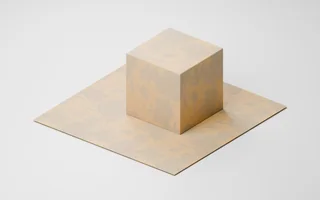
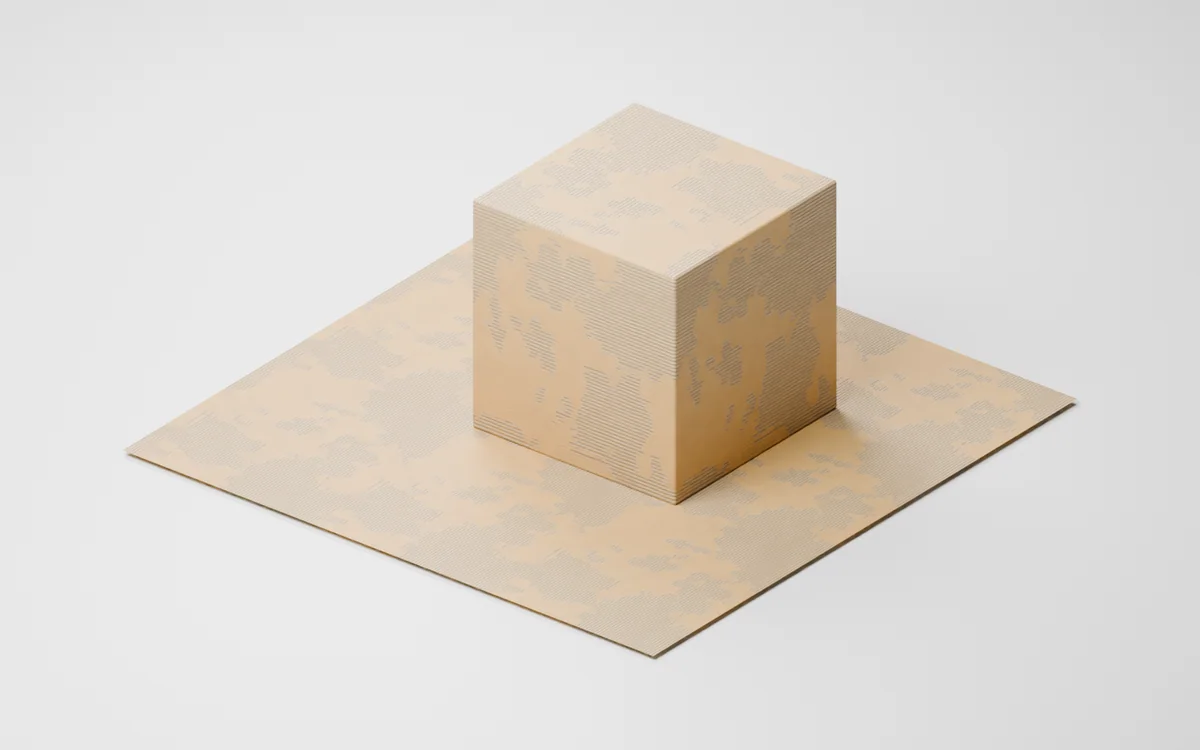
Cardboard 001 is a brown paper surface with torn patches that expose parallel corrugation. The contrast between the smoother facing and the narrow ridges helps a packaging prop read as worn cardboard under side lighting. It suits battered cartons, craft materials and workshop clutter when the camera is far enough away for a surface material to carry the detail.
Connect the three maps in Blender
The base color PNG supplies the brown facing and lighter exposed areas. Connect it to Principled BSDF Base Color with sRGB interpretation. Connect roughness as Non-Color data to Roughness. The OpenGL normal is also Non-Color; route it through a Tangent-space Normal Map node before the shader Normal input. Keep Metallic at 0 and use the same UV coordinates for all three images.
The supplied scene uses those connections directly, with normal strength 1. It packs the three images so you can inspect the material without finding missing paths. Its Cycles render uses Blender 5.0, 32 samples and AgX. Reuse it to compare your own lighting, then adjust the UVs for your object. The GLB contains the cube and plane with embedded textures; it omits the studio camera, lights and support.
Choose the scale by looking at the paper ridges
The source does not provide a physical tile size. The example plane is 3 m wide with three repeats, and each face of the 1.15 m cube uses one tile. Those scene dimensions demonstrate repetition; they do not establish a real-world corrugation size. Compare the ridge spacing with the size of your carton, reduce stretching and check adjacent faces before increasing texture resolution.
Try the seamless texture checker with the color map to inspect repeated patches. Use the texture budget calculator when deciding how much screen space a 1K map can cover. A repeated torn patch may remain visible even when the tile edges align.
When a normal map needs help from geometry
The normal changes the direction of reflected light. It does not cut holes, create layered paper edges or change a silhouette. For a close shot of a ripped flap, model the outer edge and exposed flutes, then use these maps for the finer surface. The supplied cube is closed demonstration geometry, not a hollow box, folding carton or production packaging model. The starter does not include displacement.
Frequently asked questions
Can I use this cardboard texture commercially?
ambientCG publishes Cardboard 001 under CC0-1.0. The starter includes source and licence links in its notes. Locker3d created the demonstration scene and render from those source maps.
Does the ZIP include the Blender scene?
No. The ZIP contains three 1K PNG maps, a README and source metadata. Download the Blender demo or embedded GLB separately from the buttons above.
Is this a cardboard box model with real corrugation?
No. It is a procedural surface material shown on a closed cube and plane. The normal map provides shading detail; model the layers, holes and silhouette when your shot needs actual corrugated geometry.
Continue with the Blender PBR setup guide or browse the paper and cardboard category.