About this texture
Larch End-Grain Blocks: finish and surface detail
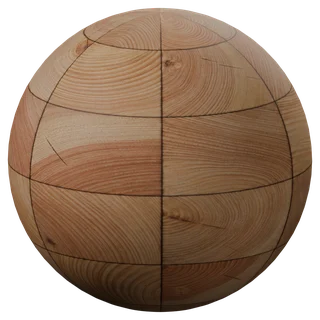
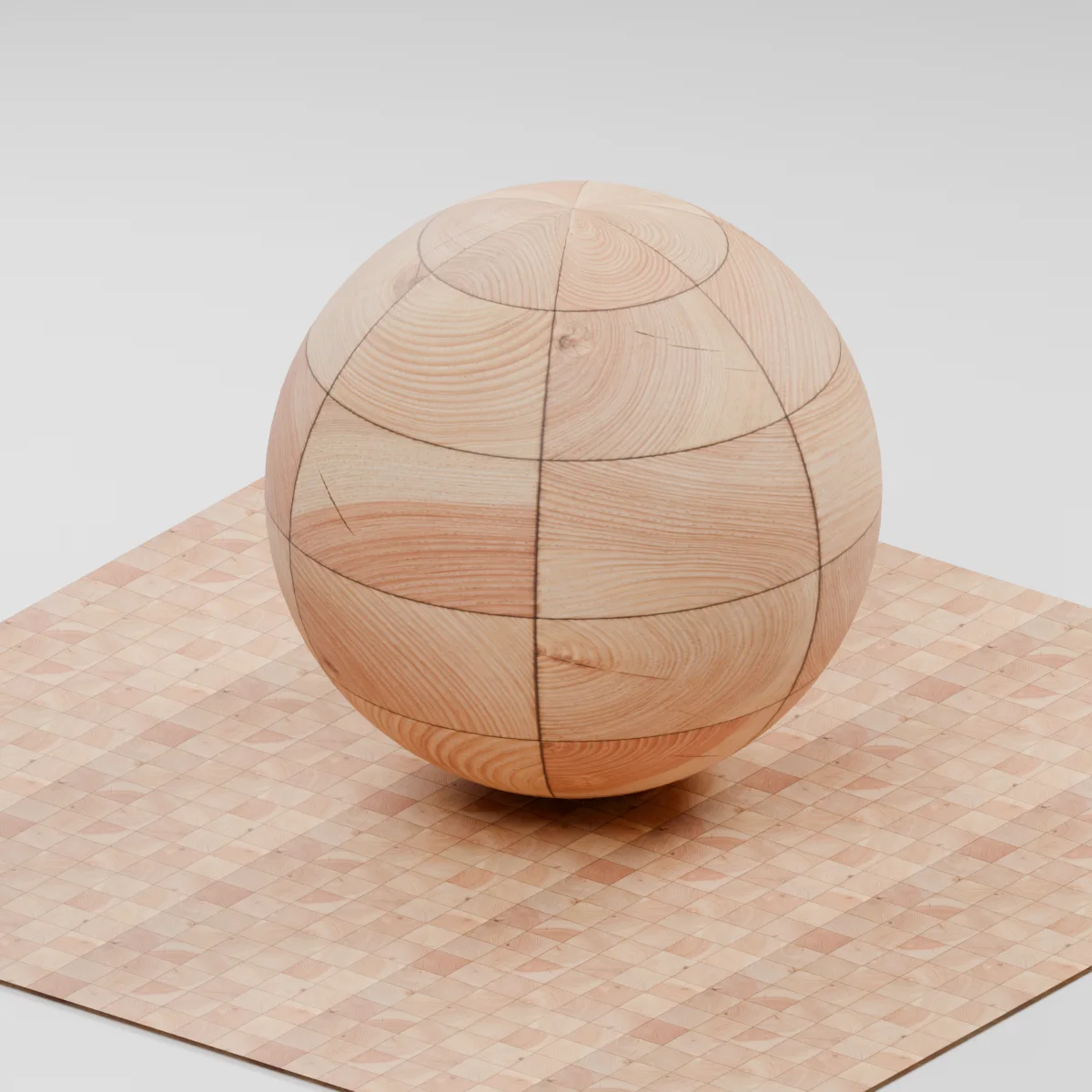
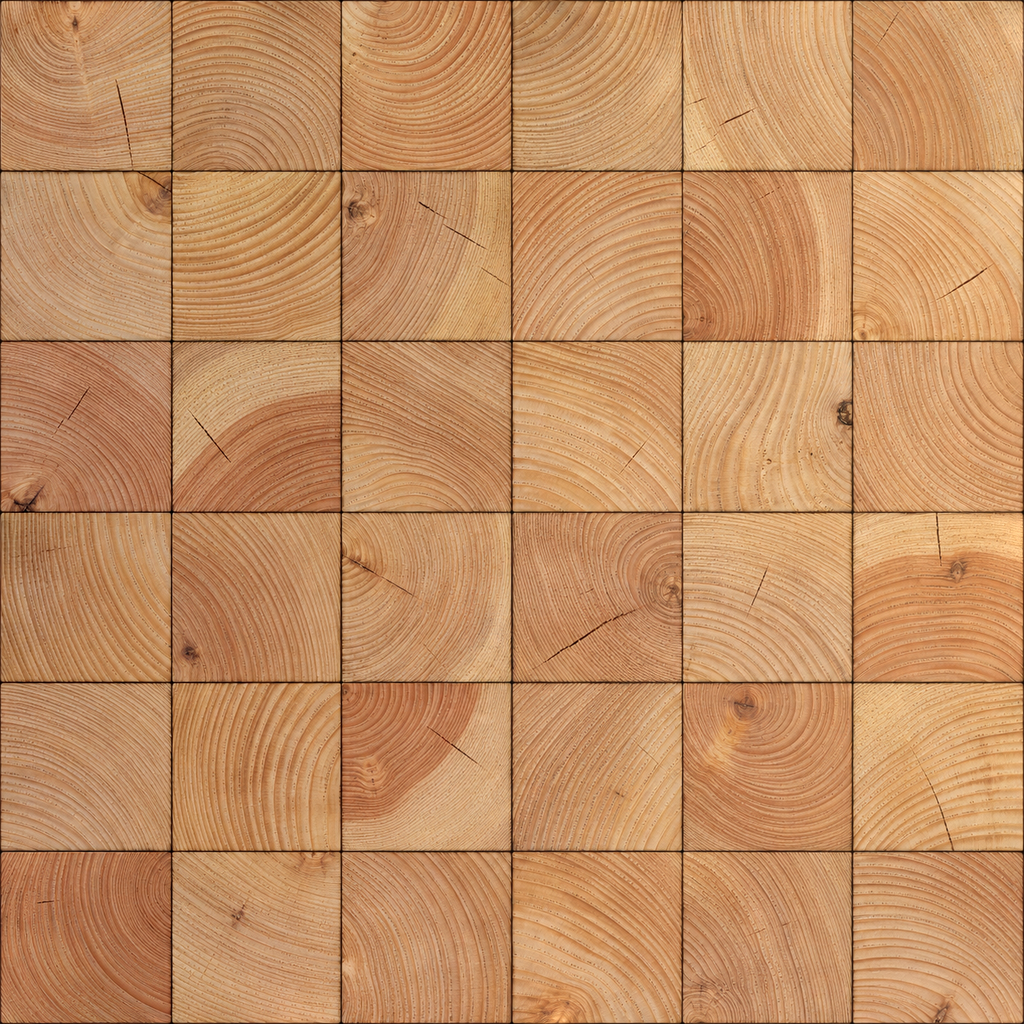
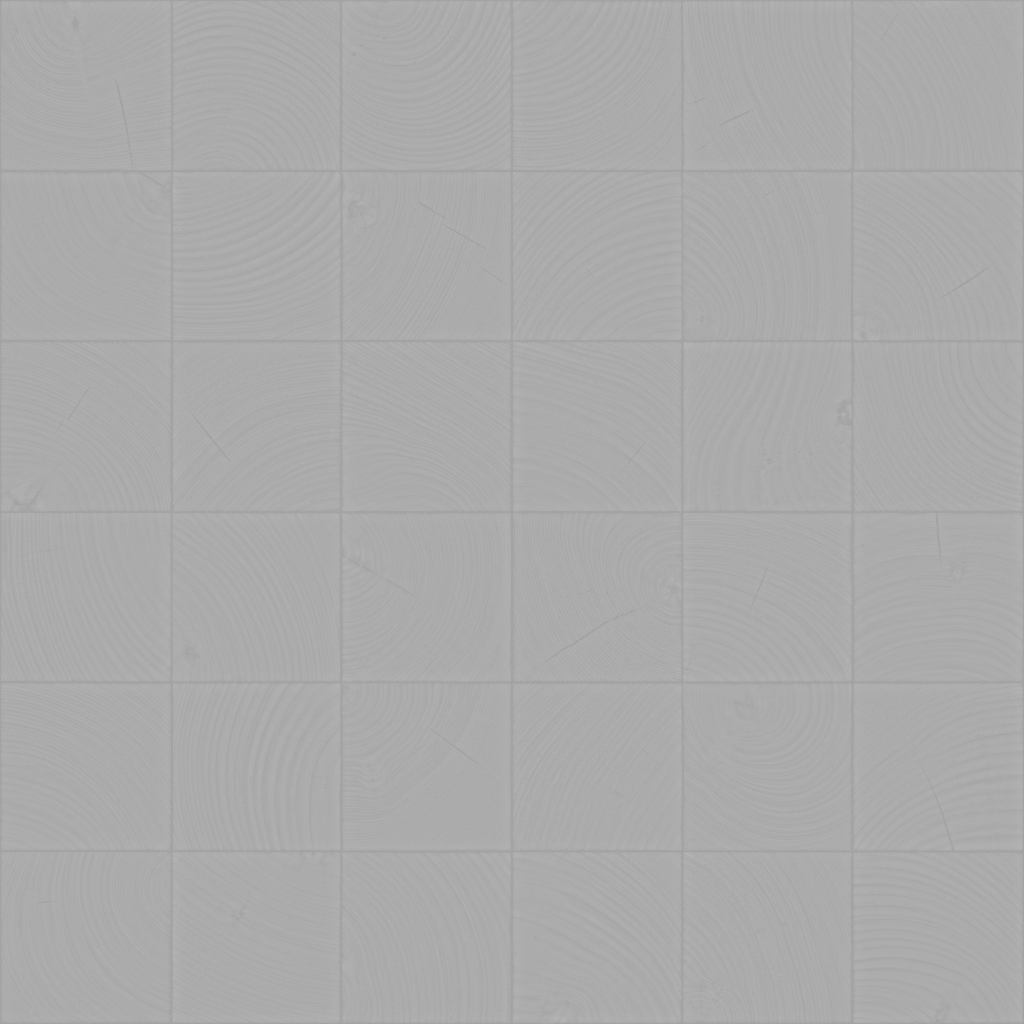
A six-by-six mosaic of cross-cut wood blocks shows warm straw, amber and muted reddish tan tones. Partial annual-ring arcs change direction from one block to the next, separated by fine dark wood-to-wood seams. The faces are flush; the finish has a restrained matte, lightly oiled appearance rather than a deep varnish gloss.
Where to use this material
End-grain wood flooring in workshop or studio interiors, and block-pattern counter surfaces on architectural props. For flooring, compare one block with a modeled door trim or chair leg; for a counter, build the exposed edge separately so a cross-cut top does not wrap like a printed box.
Keep the finish believable
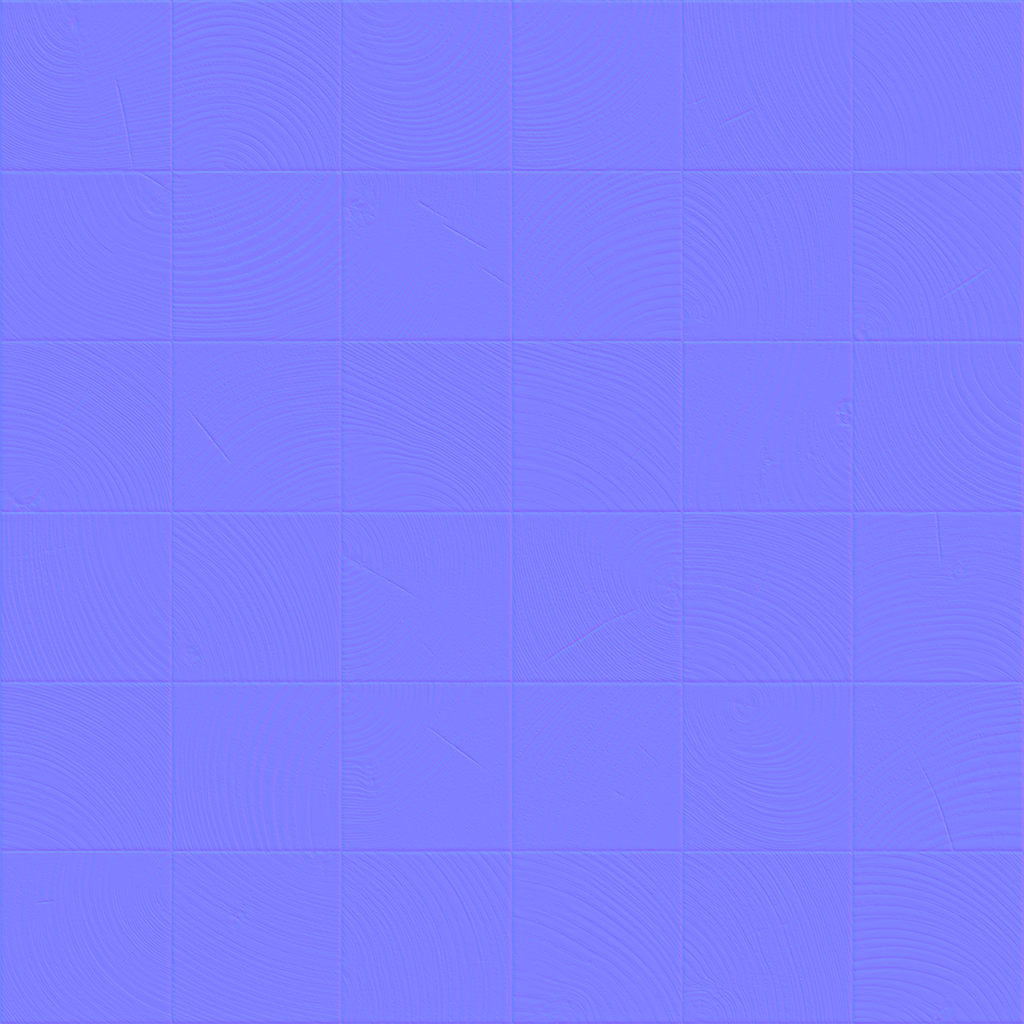
Start with metallic 0 and the supplied normal strength of 0.5. Annual-ring color should stay close to flat: stronger normal shading can make the face look carved into concentric ridges. The estimated roughness is a visual starting point; it does not simulate anisotropy, oil penetration or physical wear resistance.
Texture scale and UV repeats
At the example width of 0.6 m per full texture tile, the six blocks across the image are about 10 cm wide. This is an illustrative UV scale, not a measured timber sample. Offset larger surface UVs carefully to avoid repeating the same small split at regular intervals; model exposed joints or chips for close-up silhouettes.
The example uses 0.6 m per full texture tile. This is an illustrative UV scale, not a measured physical capture. Inspect the repeat at your actual camera distance before covering a large surface.
Set up Larch End-Grain Blocks in Blender
Connect albedo.png to Base Color using sRGB. Use roughness.png and normal-gl.png as Non-Color data. Route the normal through a Normal Map node, starting at strength 0.5. Set metallic to 0. The downloadable scene packs all three images.
The base color is AI-generated, and normal and roughness are estimates. The material changes surface shading; it does not add silhouette geometry. The pack has no displacement, AO or metallic image. For an engine expecting DirectX normals, use an image editor to invert the normal map’s green channel. Follow the Blender texture setup guide for the node connections.
Compare related finishes
Wood Table 001 · Brown Planks 04
Larch End-Grain Blocks: common questions
How is this end-grain block texture different from a plank texture?
The visible face represents wood cut across the timber, so annual rings appear as arcs within separate square blocks. A long plank face shows more lengthwise fiber direction. Use the cross-cut pattern on the intended top face and a separate material or UV layout on exposed sides.
What UV scale gives the blocks a believable size?
Start at 0.6 m across the entire six-block tile, approximately 10 cm per block. Compare the result with a modeled trim, chair leg or counter edge at your camera distance. The pack is a generated material study; the example size is illustrative and no physical dimensions were captured.
Browse the wood texture library, the existing material library, or use the tile and offset checker to inspect repetition.