A rusted metal PBR texture workflow starts with the metalness mask, not with a brown overlay. Rust is oxide sitting on steel. It is a dielectric. If you darken a chrome shader and call it rust, you get dirty metal, not corrosion. This is the order that works with Locker3d maps on corrugated sheets, beams, and props.
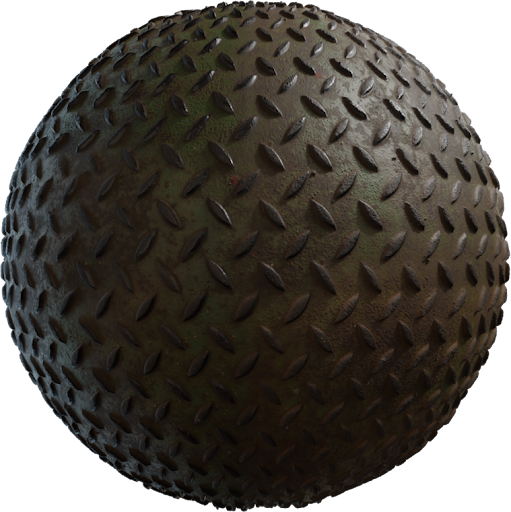
Treat rust as a dielectric, not dirty metal
Bare steel: metallic 1, tinted albedo (dim cool grey), roughness = finish. Rust, paint, and dust: metallic 0, material color in albedo, usually rougher. That split is why a metalness map exists. A 0.5 Metallic value on the whole mesh invents a substance that PBR lighting cannot sell. If the model is still fuzzy, read the complete PBR textures guide. Locker3d metal textures ship albedo, roughness, normal, and a metalness mask for this exact split. They are CC0.
Build the metalness mask first
Author or keep the metalness map as a near-binary image: white where steel still shows, black where rust or paint covers. Soften only a few pixels at the edge so flakes have a transition. Do not paint mid-grey “weather” across the sheet. In Blender, load metalness as Non-Color into Principled Metallic. In Unreal, sRGB off. If you only have albedo and roughness, build a mask from the orange pixels (Color Ramp or a hue key) and use that as metallic inverted—then clean the edge by hand. Corrugated steel should keep metalness high on the ridges that still scrape clean and low in the troughs where water sat.
Albedo and roughness follow the mask
Albedo carries orange, umber, and remaining steel tint. It must not contain a baked sun streak. Roughness goes up on rust (matte oxide) and down on surviving metal (scratches, mill scale, oil). Fingerprints and grind marks belong in roughness, not as dark scribbles in color. The normal should show flakes and corrugation; do not blur albedo to fake rust depth. Plug the set with the same Mapping on every image so flakes line up with the color. Node order: how to apply PBR textures in Blender.
- Bare metal → metalness 1, steel tint, roughness = finish.
- Rust / paint / dust → metalness 0, oxide color, higher roughness.
- Edges → short gradient only; no 0.5 wash.
Layer extra rust without breaking PBR
For a hero prop, you can layer a second rust albedo in cavities using AO or a cavity mask, still at metallic 0. Keep the extra layer in the same color space (sRGB for color, Non-Color for masks). Do not add a second Principled with Metallic 0.5 “for blend.” Mix Color or Mix Shader with the mask you already trust. Structural steel next to concrete looks better with rust on edges and fasteners, not a uniform orange overlay on every beam. Pair with concrete or wood so the oxide has a neighbor to contrast against.
Light rusted metal like metal
Remaining steel still needs something to reflect: an HDRI, a warehouse window, a cloudy sky. An empty grey world makes both rust and metal look like cardboard. Then judge roughness. A corrugated sheet under a single hard sun will look streaky; add fill. If the rust sparkles, metallic leaked into oxide pixels. If the steel looks painted brown, albedo is doing the rust and metallic is still 1 everywhere.
CC0 rusted metal from Locker3d
Download weathered and corrugated sets from /textures/metal/. Use them in commercial work without attribution. You cannot claim exclusive ownership of the scans; see CC0 textures: what you can and cannot do. More material notes: blog. When the first sheet looks right, group the nodes and expose the metalness texture. The next beam is a mask swap, not a new shader philosophy.
Frequently asked questions
Should rust use metalness 1 or 0?
Rust is a dielectric. Those pixels are metalness 0, with orange/brown albedo and higher roughness. Only remaining bare steel stays at metalness 1.
Why does a 0.5 metallic slider look wrong on rusted steel?
PBR metals are binary at the pixel. 0.5 invents a material that does not exist. Use a mask: white for bare metal, black for rust, and keep the edge to a few pixels.
Are Locker3d rusted metal textures CC0?
Yes. Download them from the metal category and use them in commercial films, games, and archviz without attribution. Connect albedo, roughness, normal, and metalness as a set.