

About this texture
Crosscut Pencil Mosaic: finish and surface detail
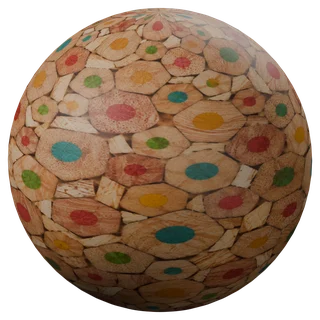
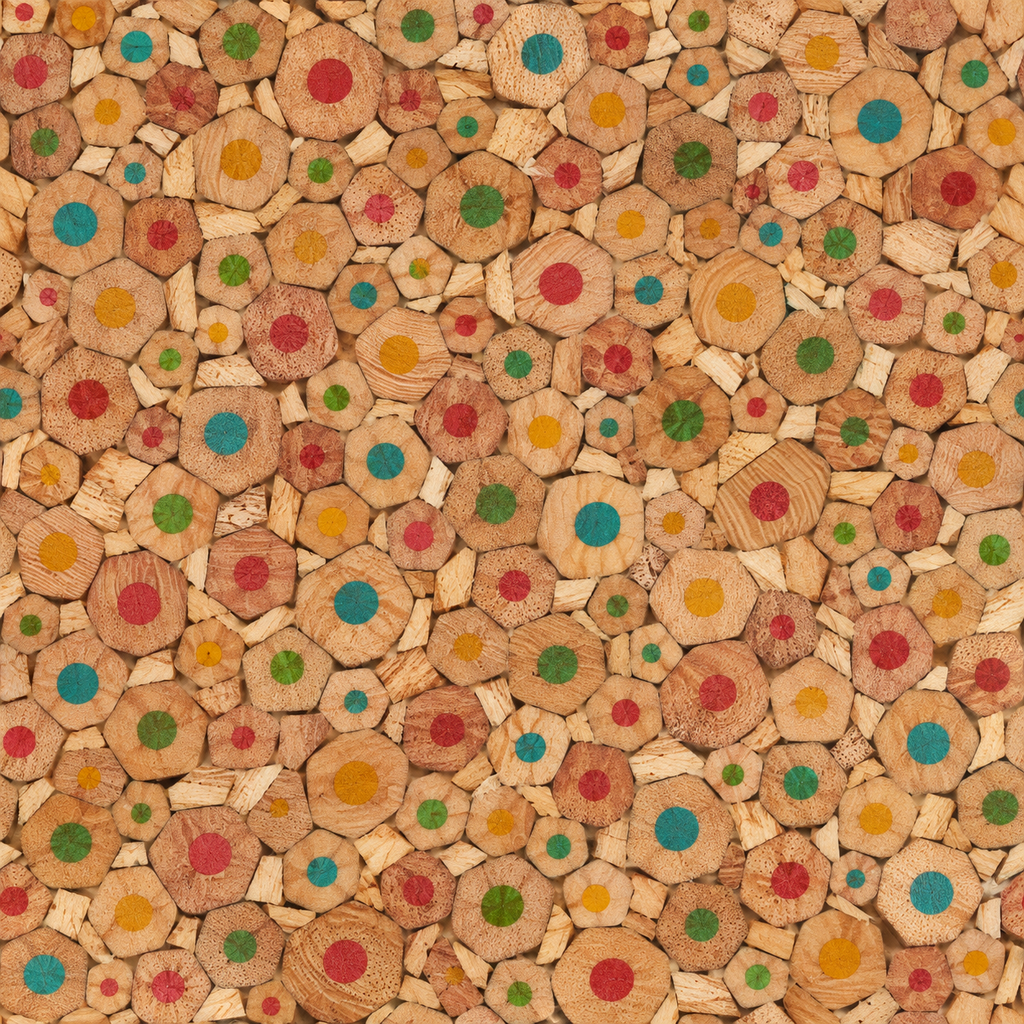
Irregular pencil offcuts with red, ochre, green and blue cores sit among pale wood slivers. The mismatched shapes and grain directions break up the mosaic.
Where to use this material
Novelty table insets, pencil-shop props and decorative model panels. Frame with plain wood to make the repeated cross sections readable.
Keep the finish believable
Keep the colored cores mostly flush. Model exposed thickness on a cut section and use the 1K pack for surface appearance.
Texture scale and UV repeats
Set a 24 cm repeat and compare the hexagons to a modeled pencil or trim. The pieces are stylized and their size is illustrative.
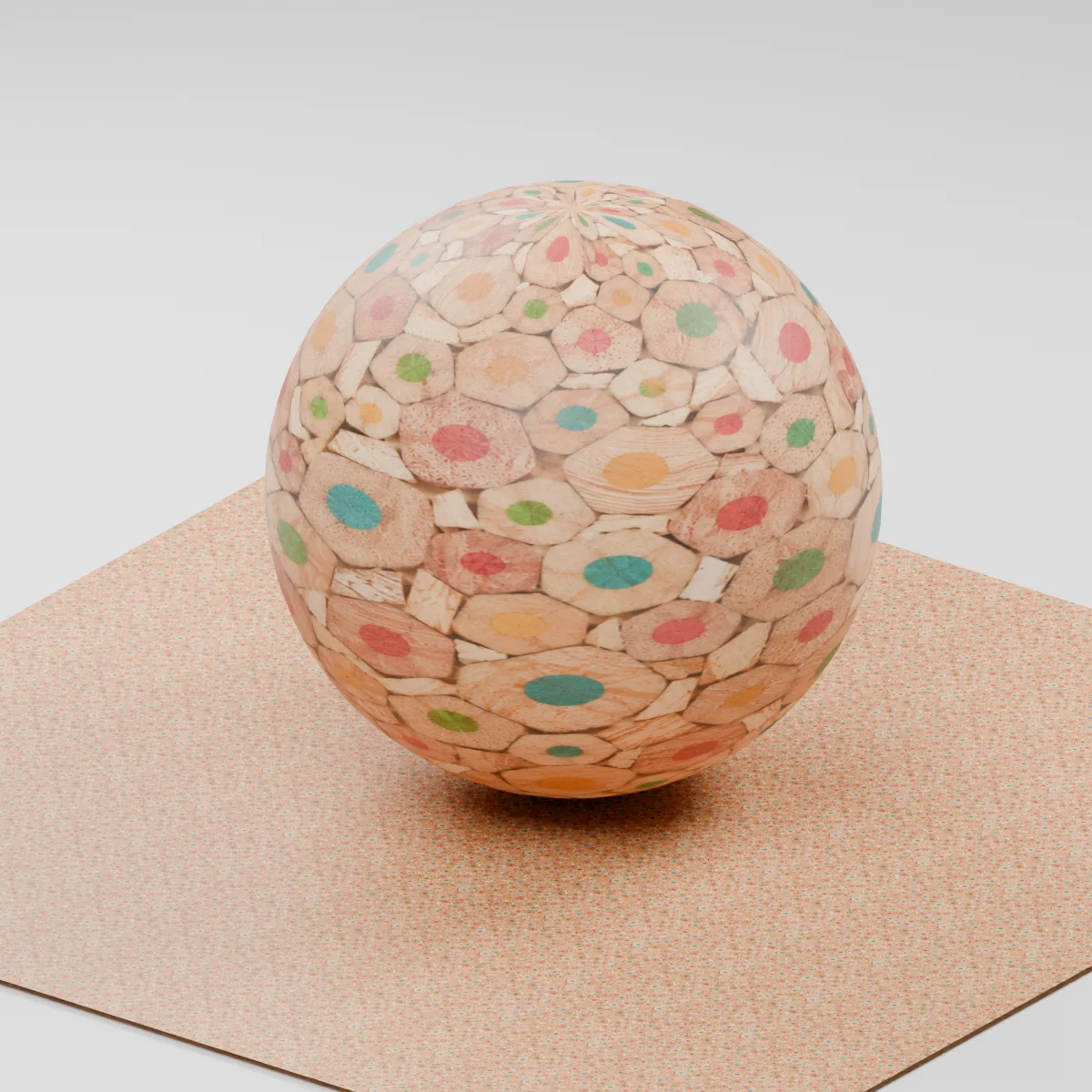
The example uses 0.24 m per full texture tile. This is an illustrative UV scale, not a measured physical capture. Inspect the repeat at your actual camera distance before covering a large surface.
Set up Crosscut Pencil Mosaic in Blender
Connect albedo.png to Base Color using sRGB. Use roughness.png and normal-gl.png as Non-Color data. Route the normal through a Normal Map node, starting at strength 0.53. Set metallic to 0. The downloadable scene packs all three images.
The base color is AI-generated, and normal and roughness are estimates. The material changes surface shading; it does not add silhouette geometry. The pack has no displacement, AO or metallic image. For an engine expecting DirectX normals, use an image editor to invert the normal map’s green channel. Follow the Blender texture setup guide for the node connections.
Compare related finishes
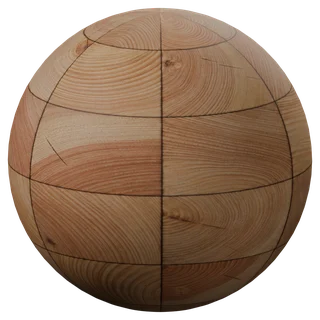
Larch End-Grain Blocks · Rosewood Veneer1
Crosscut Pencil Mosaic: common questions
Does this behave like ordinary end-grain timber?
It adds repeating manufactured hexagons and colored cores. Use plain end grain for continuous timber grain without the mosaic.
Should I use it as a full tabletop without checking repeats?
Preview the full tabletop first. Use a bounded inset or independent UV offsets to manage recognizable rows.
Browse the wood texture library, the existing material library, or use the tile and offset checker to inspect repetition.