

About this texture
Dendritic Limestone: finish and surface detail
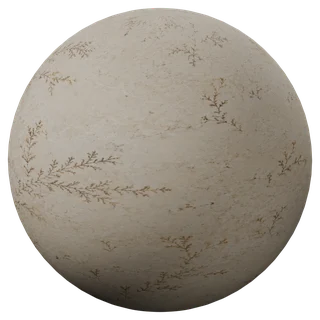
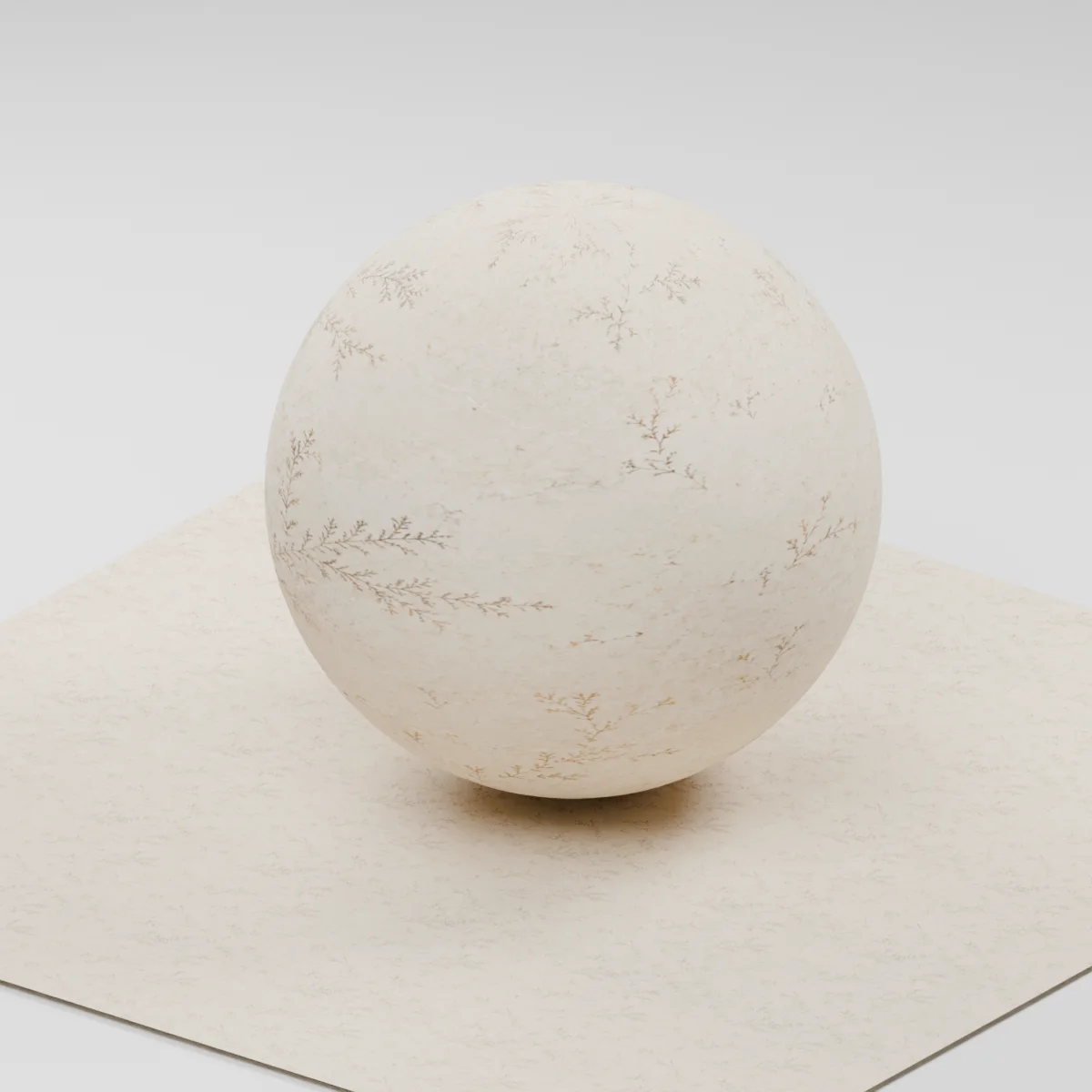
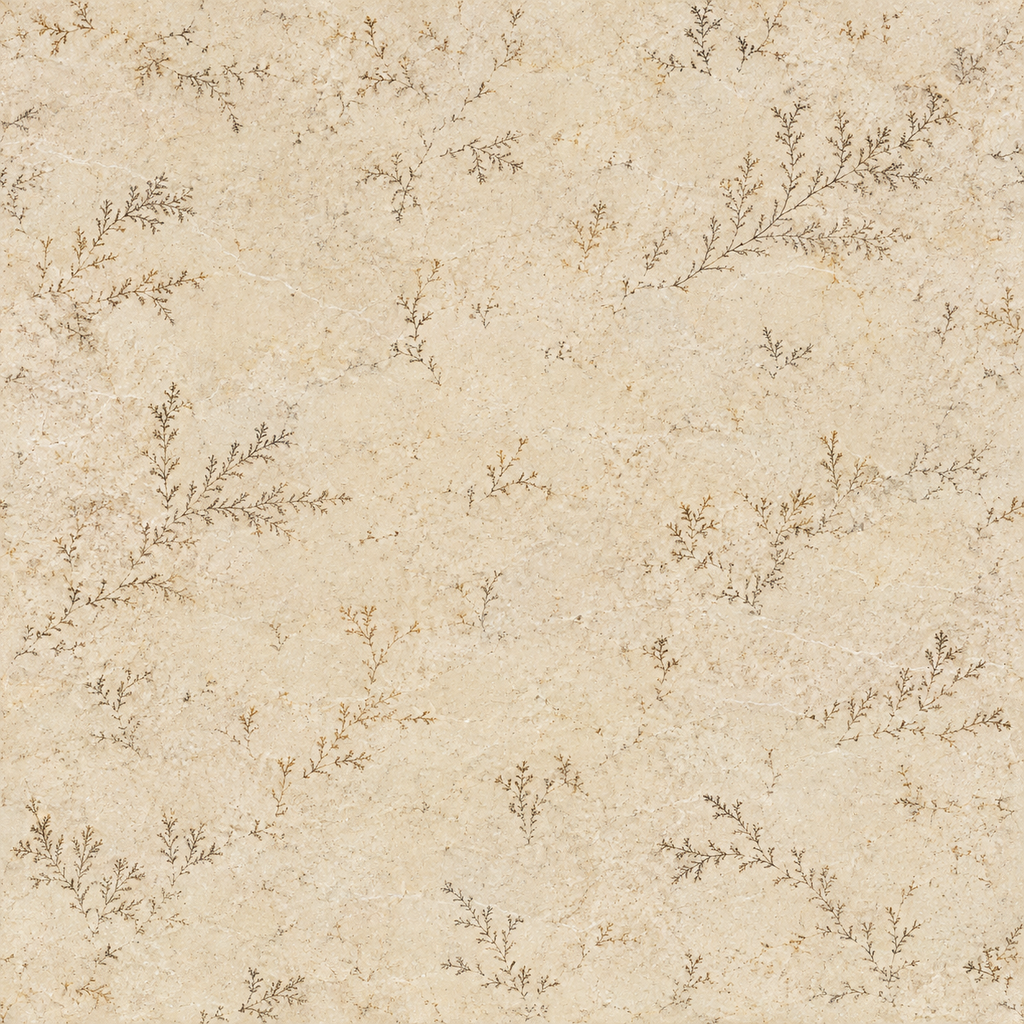
Cream limestone with scattered brown-black branching marks and fine pores. The branches are a surface color motif over a granular matrix.
Where to use this material
Accent wall panels, stone specimen displays and small architectural insets. Offset UV islands from panel to panel to avoid repeating the same cluster.
Keep the finish believable
Keep relief shallow so dark dendrites read as mineral color. This study cannot identify the mineral or establish a real quarry source.
Texture scale and UV repeats
Use a 45 cm repeat as a starting point. The largest branch should occupy a fraction of a panel rather than span a whole wall.
The example uses 0.45 m per full texture tile. This is an illustrative UV scale, not a measured physical capture. Inspect the repeat at your actual camera distance before covering a large surface.
Set up Dendritic Limestone in Blender
Connect albedo.png to Base Color using sRGB. Use roughness.png and normal-gl.png as Non-Color data. Route the normal through a Normal Map node, starting at strength 0.46. Set metallic to 0. The downloadable scene packs all three images.
The base color is AI-generated, and normal and roughness are estimates. The material changes surface shading; it does not add silhouette geometry. The pack has no displacement, AO or metallic image. For an engine expecting DirectX normals, use an image editor to invert the normal map’s green channel. Follow the Blender texture setup guide for the node connections.
Compare related finishes
Dendritic Limestone: common questions
Do the branching marks need displacement?
Use the supplied normal for the stone grain. Keep the branches visually flat and model exposed broken edges separately.
How does it differ from vein-cut travertine?
Travertine gives you directional bands and pores. The branch clusters here create irregular accents across a pale continuous surface.
Browse the stone texture library, the existing material library, or use the tile and offset checker to inspect repetition.