
About this texture
Blue Fish-Scale Ceramic: finish and surface detail
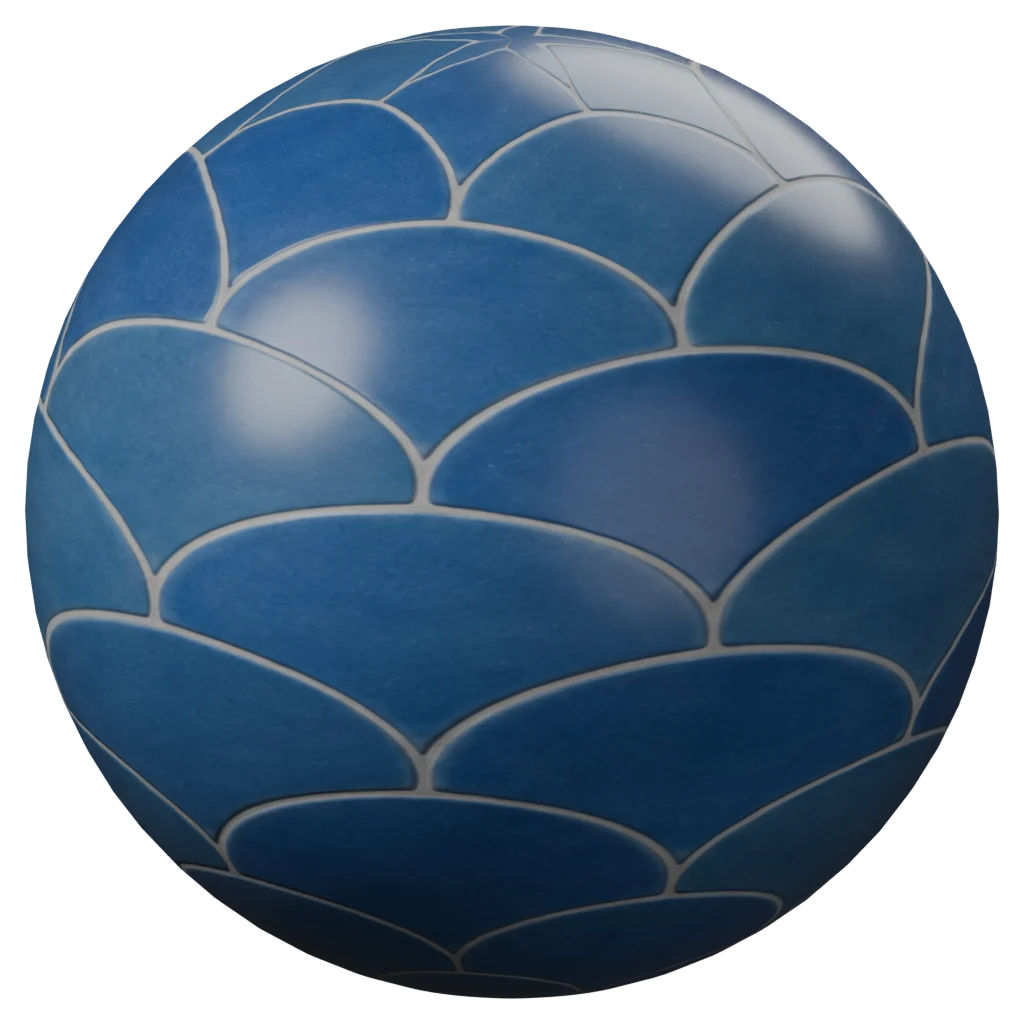
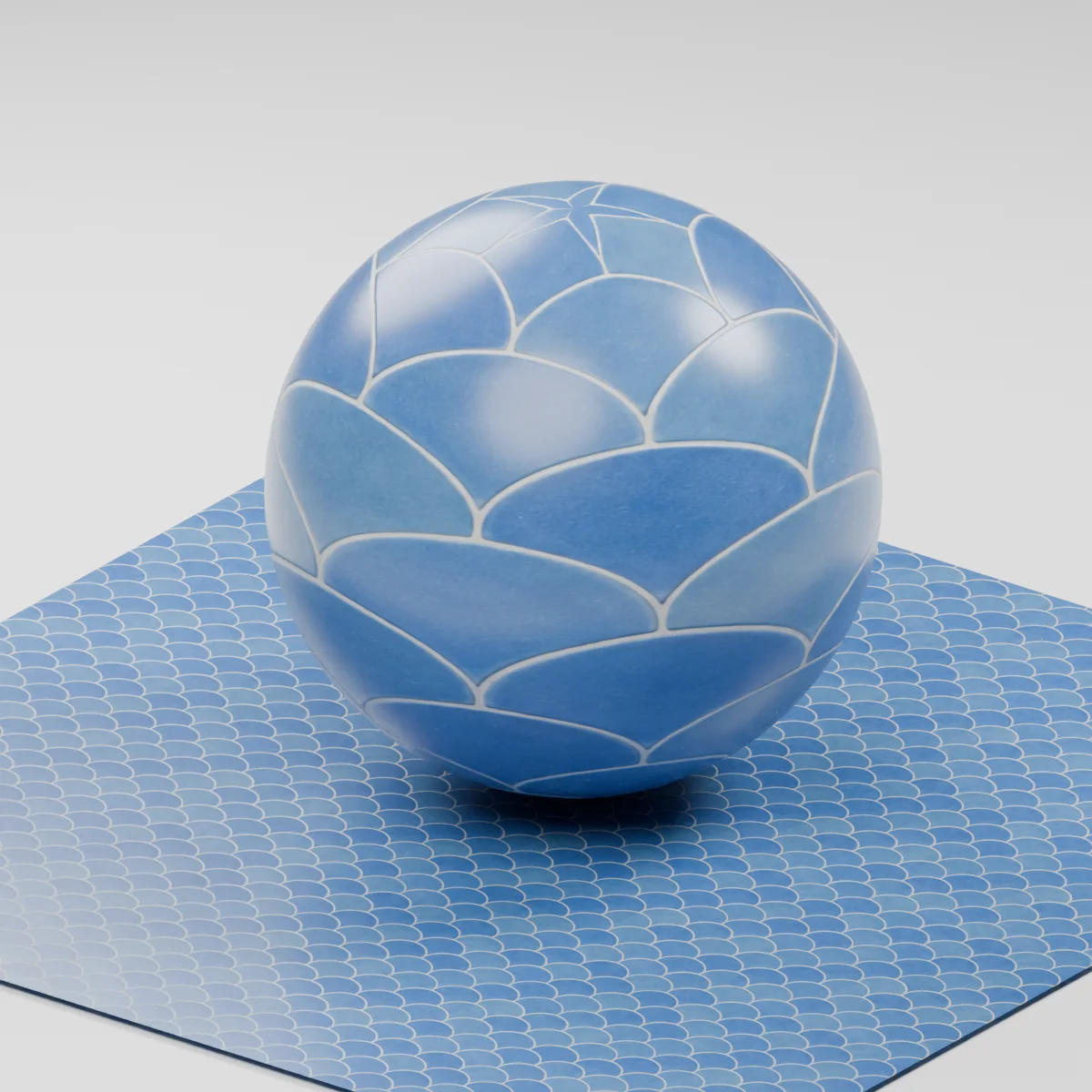
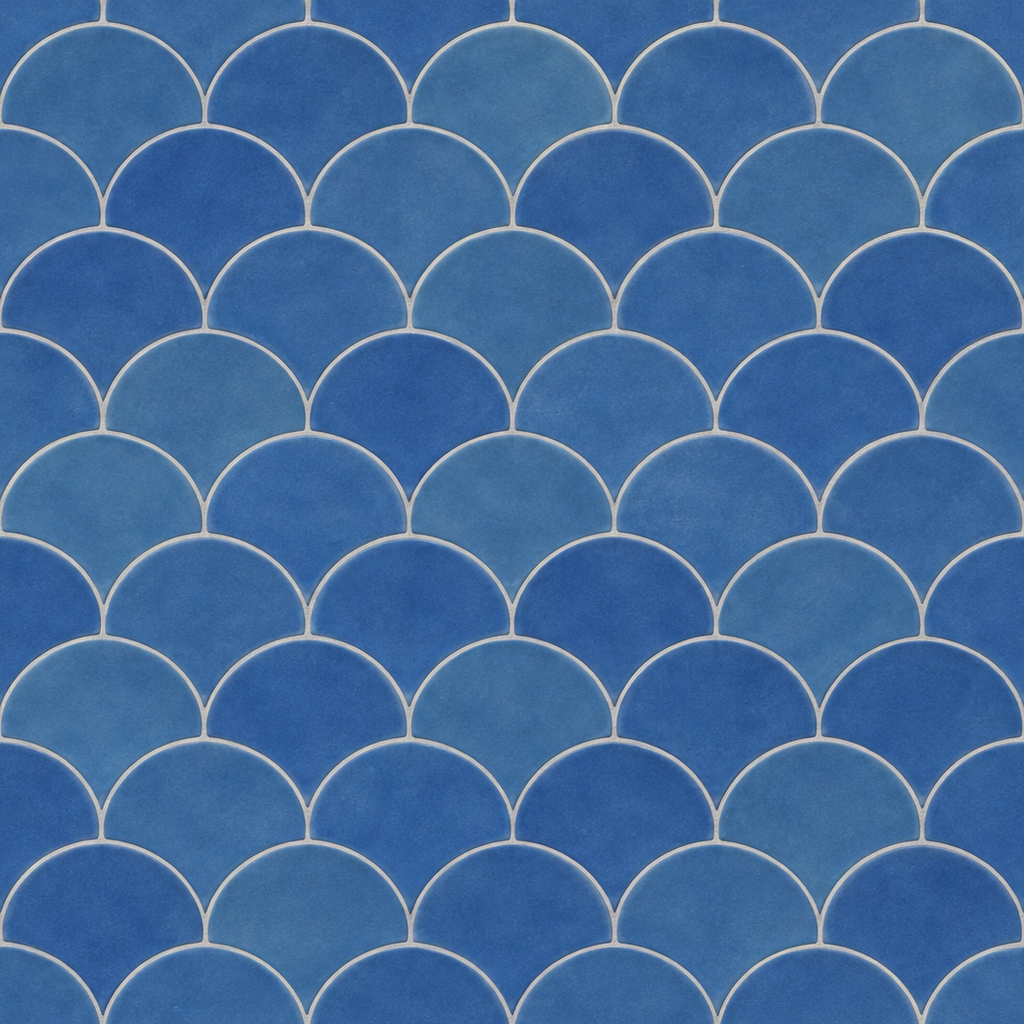
Blue glazed ceramic faces form staggered scalloped rows with narrow pale gray grout. Small kiln-tone differences separate neighboring modules while the curved joints define the fish-scale layout. The faces stay smooth rather than carrying shell ribs or raised overlapping edges.
Where to use this material
Use it on a kitchen backsplash or a bathroom feature wall in an interior render. Keep the scallop direction consistent on adjoining faces and plan the cuts around taps, corners and niches. Model exposed tile edges, trims and outside corners instead of expecting the normal map to supply a silhouette.
Keep the finish believable
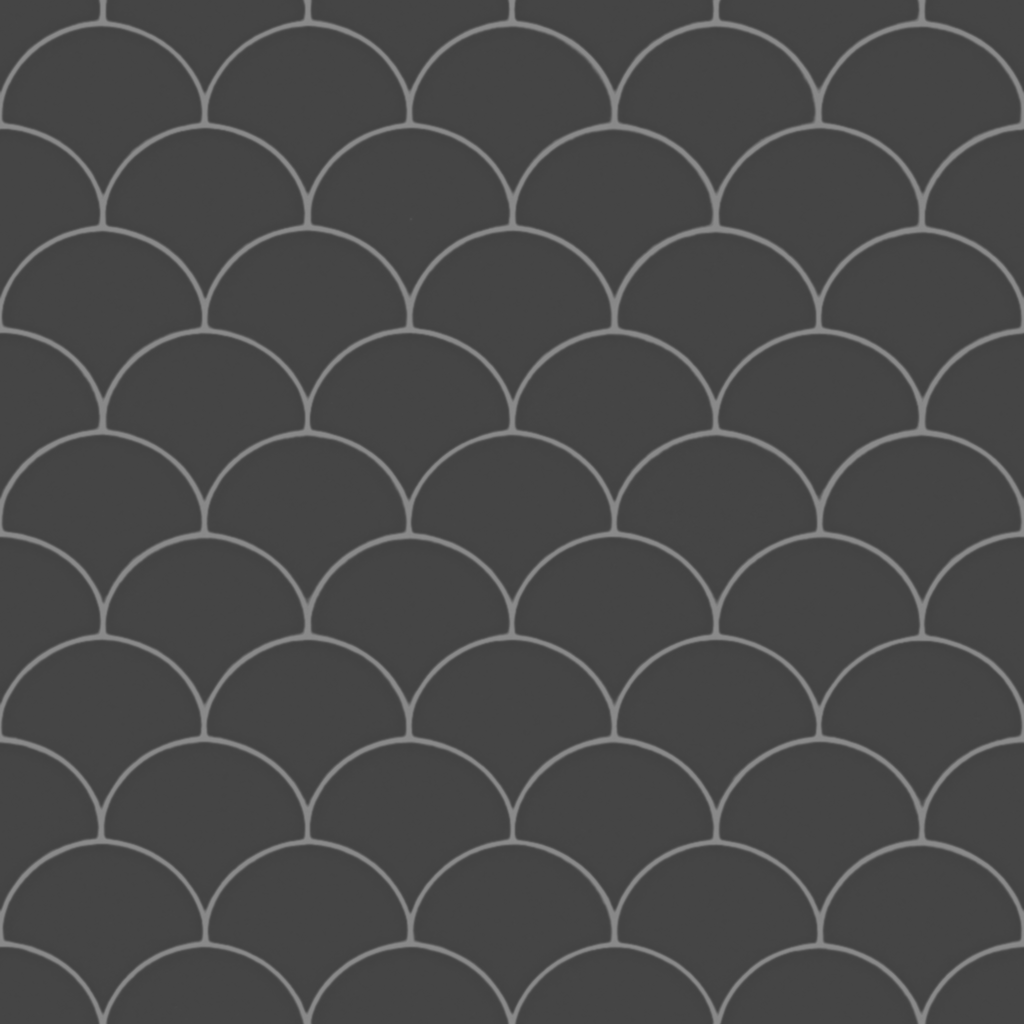
Start near roughness 0.27 and normal strength 0.65. The estimated roughness gives the pale grout a rougher response than the glazed blue faces. Use a broad area light to assess the sheen, and reduce the normal if the curved joints appear too deep. There is no displacement in this starter.
Texture scale and UV repeats
The final demonstration uses an illustrative 60 cm square repeat with five horizontal module pitches and ten staggered rows. This puts the horizontal pitch near 12 cm and the row step near 6 cm. The source was cropped to preserve the repeating joint phase. Check the pattern against a tap or shelf and match the UV phase at corners; dimensions are visual estimates.
The example uses 0.6 m per full texture tile. This is an illustrative UV scale, not a measured physical capture. Inspect the repeat at your actual camera distance before covering a large surface.
Set up Blue Fish-Scale Ceramic in Blender
Connect albedo.png to Base Color using sRGB. Use roughness.png and normal-gl.png as Non-Color data. Route the normal through a Normal Map node, starting at strength 0.65. Set metallic to 0. The downloadable scene packs all three images.
The base color is AI-generated, and normal and roughness are estimates. The material changes surface shading; it does not add silhouette geometry. The pack has no displacement, AO or metallic image. For an engine expecting DirectX normals, use an image editor to invert the normal map’s green channel. Follow the Blender texture setup guide for the node connections.
Compare related finishes
Charcoal Penny-Round Mosaic · Ribbed Pistachio Ceramic · Matte Brick-Format Porcelain
Blue Fish-Scale Ceramic: common questions
How do I keep the fish-scale rows continuous around a corner?
Use the same UV scale and scallop direction on each wall, then align the row step and half-module offset at the corner. Put UV seams at planned tile cuts and model the exposed trim or corner detail.
Why should the grout and blue faces have different roughness?
The starter approximates a smoother glazed ceramic face and a rougher grout line. Inspect both under a broad light and adjust the roughness contrast to suit the scene. These values are estimated from a generated image, not measured glaze or grout data.
Browse the tiles texture library, the existing material library, or use the tile and offset checker to inspect repetition.